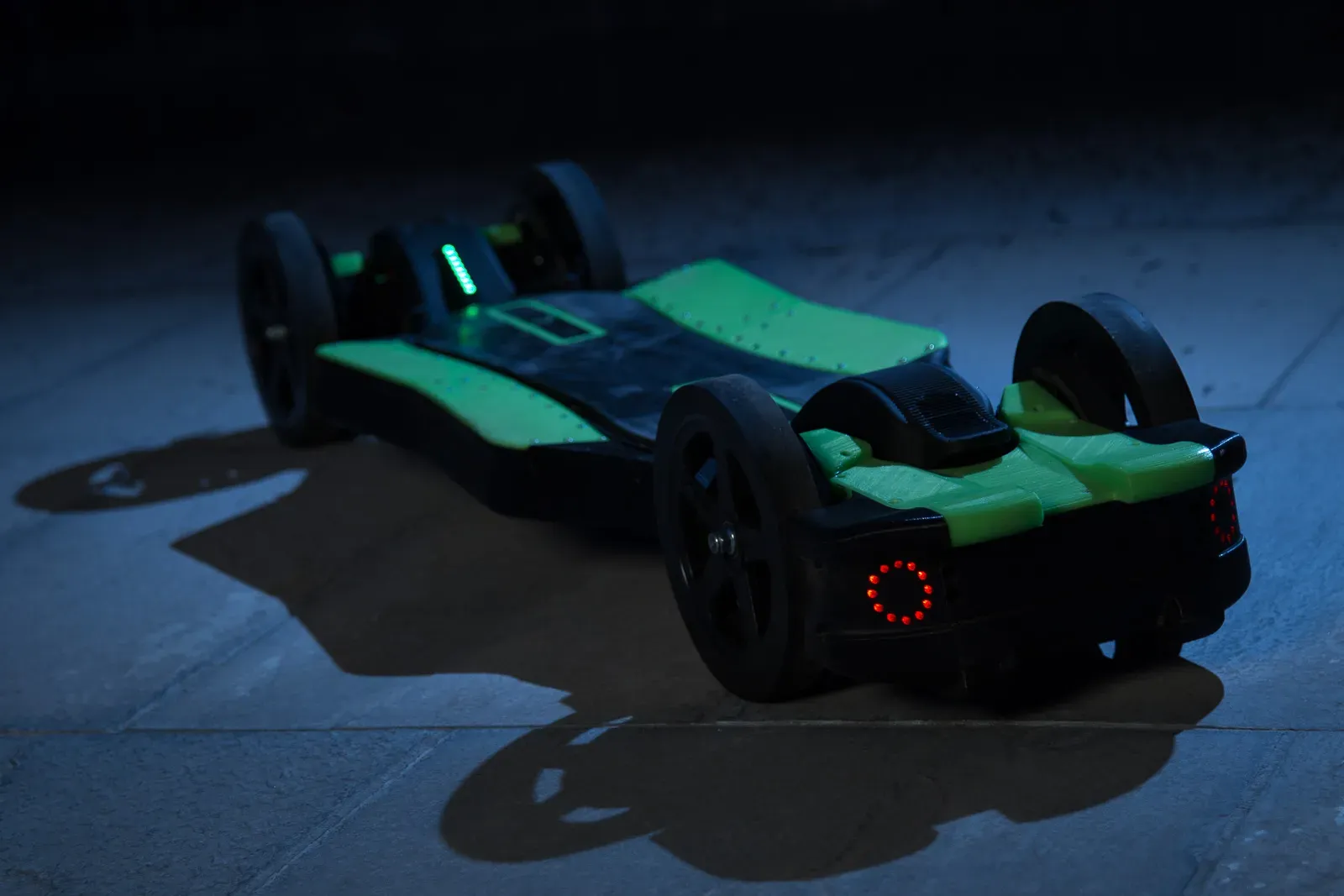
Most CTOs and founders dream of building a physical product that changes an industry. I did it—and learned expensive lessons along the way.
Between 2014 and 2018, I co-founded Faraday Motion, a Berlin-based electric vehicle startup. We:
- Raised funding from StartupBootcamp
- Built the world's most advanced DIY electric skateboard (45 kph, 30km range)
- Partnered with Audi, Daimler, Continental, and Stratasys
- Spoke at international conferences and appeared on national TV
- Built a community of thousands of makers and enthusiasts
- Developed open-source frameworks used by universities worldwide
And ultimately, we failed to achieve profitability and had to sell the company.
Here's what I learned spending nearly $1 million building a hardware startup—and what you should know before starting your own.
The $500 Experiment That Started Everything
2014 - Copenhagen
It started simply: I bought a consumer 3D printer to experiment. Not to start a company. Not to raise funding. Just to learn.
Within weeks, I had a question: Could I build an electric skateboard using only 3D-printed parts and RC airplane components?
This question led to:
- A working prototype in 6 weeks
- My first 1,000 Thingiverse downloads in 3 months
- Inbound interest from Autodesk and Ultimaker
- The realization that 3D printing + electric vehicles was a massive opportunity
The CTO Lesson:
Starting small with rapid prototyping validates technical feasibility before you spend serious money. Today, with AI-powered design tools and affordable 3D printing, you can validate hardware concepts in weeks, not months.
Modern equivalent:
- 3D print basic prototypes: $550-1,360 (AED 2,000-5,000)
- Electronics prototyping (Arduino/ESP32): $135-270 (AED 500-1,000)
- CAD software (Fusion 360): $0-55/month (AED 0-200/month)
- Total validation cost: $820-1,900 (AED 3,000-7,000)
Compare this to traditional product development agencies charging $41,000+ (AED 150,000+) for initial concepts.
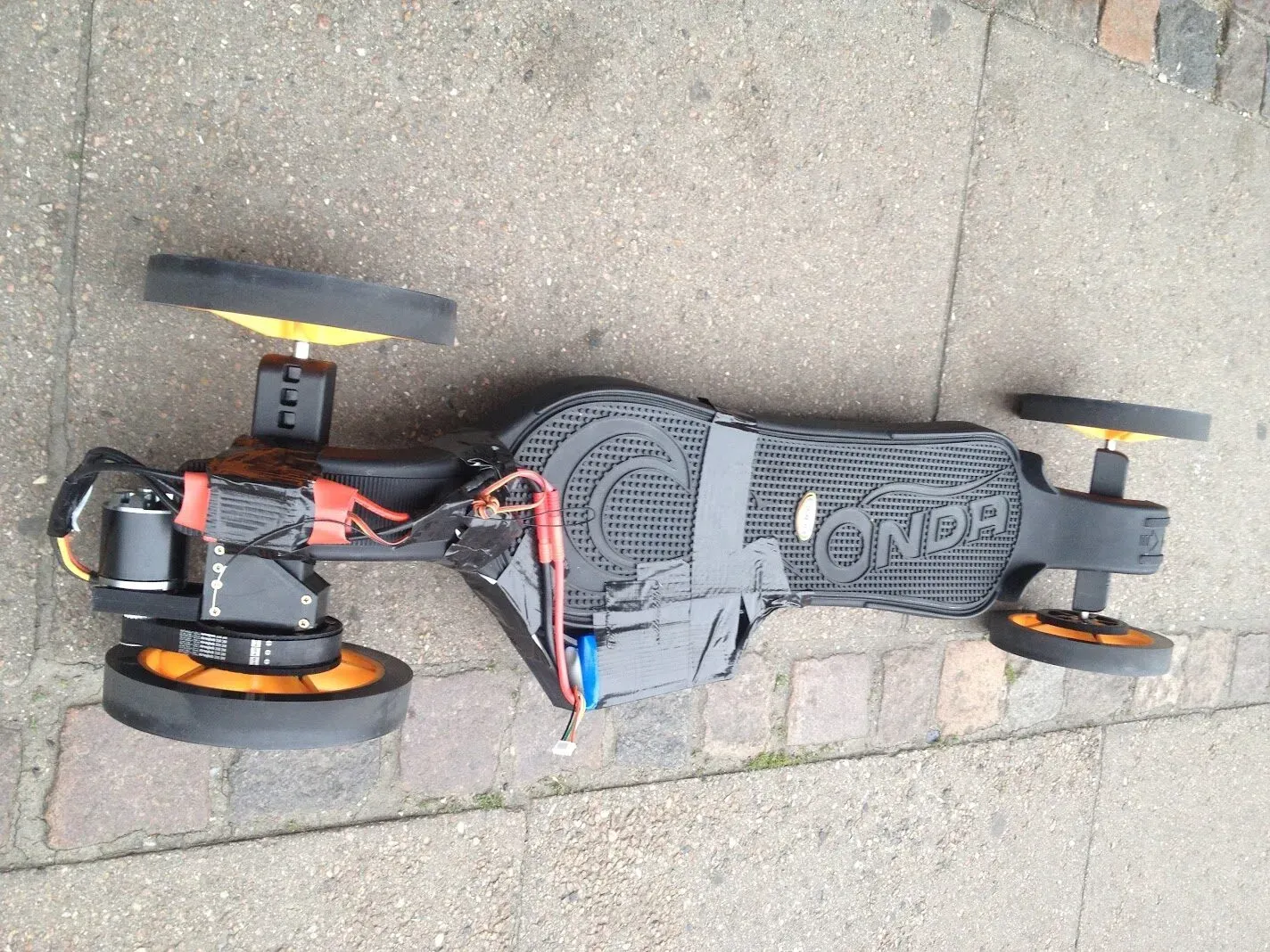
My first electric skateboard prototype built with 3D-printed parts and RC airplane components - the $500 experiment that started everything.
From Hobby to Product: The Technical Evolution
Phase 1: Learning the Tools (Months 1-6)
Tools mastered:
- Tinkercad → Basic 3D modeling (free, web-based)
- 123Design → Intermediate modeling (discontinued, now Fusion 360)
- Fusion 360 → Professional CAD (industry standard)
- Ultimaker 2 → Reliable 3D printing (upgraded from cheap printer)
What I learned:
- Cheap 3D printers waste more time than they save
- CAD skills compound—each design gets faster
- Open-source communities accelerate learning 10x
- Documentation matters more than you think
Modern advice for Dubai founders:
Don't skimp on tools. A $3,300 (AED 12,000) Bambu Lab X1 Carbon will save you months vs. a $410 (AED 1,500) budget printer. Your time is worth more than the price difference.
Phase 2: Advanced Prototype - The Hyperboard (Months 6-12)
Specs achieved:
- Top speed: 45 kph
- Range: 30 km
- Custom battery management system
- Smartphone app control
- Advanced regenerative braking
Technical challenges solved:
- Thermal management - Electronics overheating during testing
- Battery safety - Lithium batteries are dangerous if mismanaged
- Motor control - Smooth acceleration curves, regenerative braking
- Mechanical stress - 3D-printed parts breaking under load
- Weatherproofing - Electronics + water = bad
Key insight:
The Hyperboard was too advanced for a first product. It was an engineering showcase, not a business.
The mistake: Building what's technically impressive instead of what customers will buy.
The fix: We pivoted to the Faraday Motion Spine—a simpler, modular design that makers could customize.
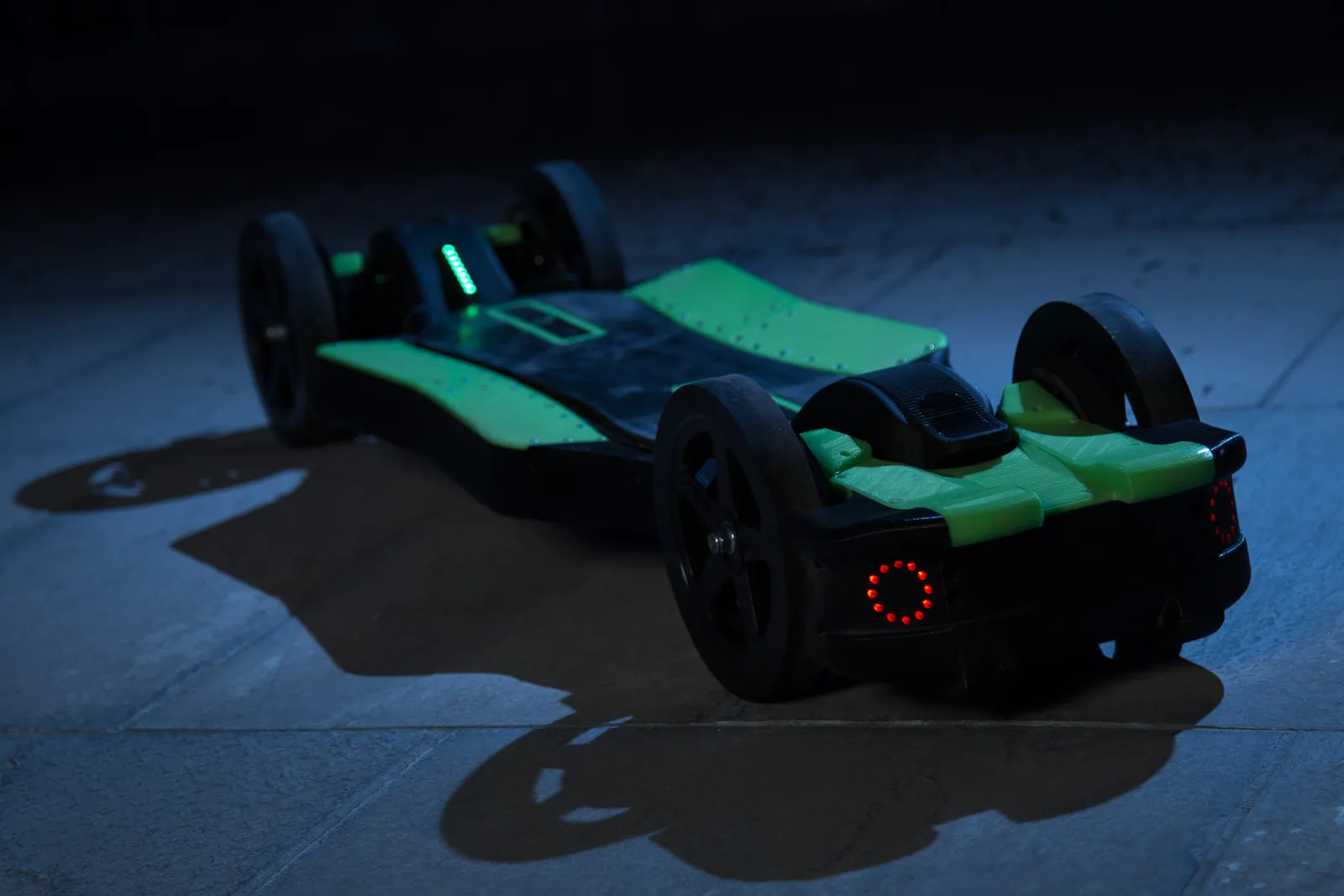
The Faraday Motion Hyperboard - 45 kph top speed, 30km range. Technically impressive but too complex for a first product.
The Pivot: From Complex to Modular
The Faraday Motion Spine
Product strategy:
- Modular design (users customize with their own decks/wheels)
- Open-source electronics (VESC motor controller)
- 3D-printable parts (community can modify)
- Educational focus (universities, makerspaces)
Launch results:
- 25 pre-orders during livestream launch event
- 100+ orders in first 3 months
- Revenue: ~$41,000 (AED 150,000) in year 1
- Profit margin: 35% (good for hardware)
What worked:
✅ Community involvement (makers love customization)
✅ Clear value proposition (DIY electric skateboard kit)
✅ Educational angle (schools and universities)
✅ Open-source approach (built trust and awareness)
✅ Live demonstration (streamed build event)
What didn't work:
❌ Market too niche (makers, not mainstream)
❌ Customer support complexity (custom builds break in custom ways)
❌ Supply chain challenges (electronics from China, 3D prints in Denmark)
❌ Scaling difficulties (each unit semi-custom)
❌ Limited repeat purchases (one-time sale)
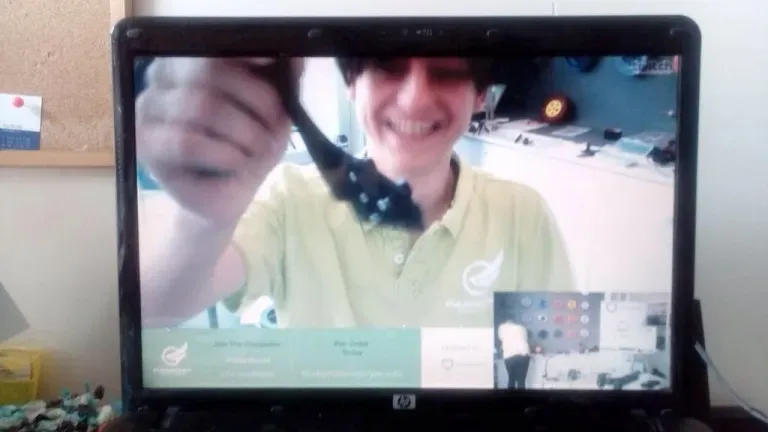
Constantin and Frederik building the Faraday Motion Spine live at 3D Printhuset - we got 25 pre-orders during the livestream.
Building the Team: From Solo Founder to Berlin Startup
The Challenge
A hardware startup requires expertise in:
- Mechanical engineering (3D design, materials, manufacturing)
- Electrical engineering (motors, batteries, control systems)
- Software engineering (firmware, mobile apps, cloud)
- Business development (sales, partnerships, fundraising)
- Marketing (community, content, brand)
No one person has all these skills. I certainly didn't.
The Team We Built
Co-founders:
- Constantin - Web Development, Software, Business development
- Martin - 3D design, mechanical engineering
- Me (Sune) - Software, electronics, partnerships, product strategy
Early hires:
- Marketing specialist (community management)
- Firmware developer (embedded systems)
- Business development (corporate partnerships)
Total team size: 7 people at peak
Monthly burn rate: $50,000 (AED 184,000)
What I Learned About Team Building
✅ What worked:
- Complementary skills - We covered all critical areas
- Shared passion - Everyone believed in electric mobility
- Clear roles - Minimal overlap, clear ownership
- Remote-friendly - Team across Europe, pre-COVID
❌ What didn't work:
- Misaligned expectations - Different visions for company future
- Communication gaps - Remote work without proper processes
- No clear CEO - Too many co-founders, unclear decision-making
- Equity disputes - Early stage equity distribution caused friction
- Burnout - Small team doing too much
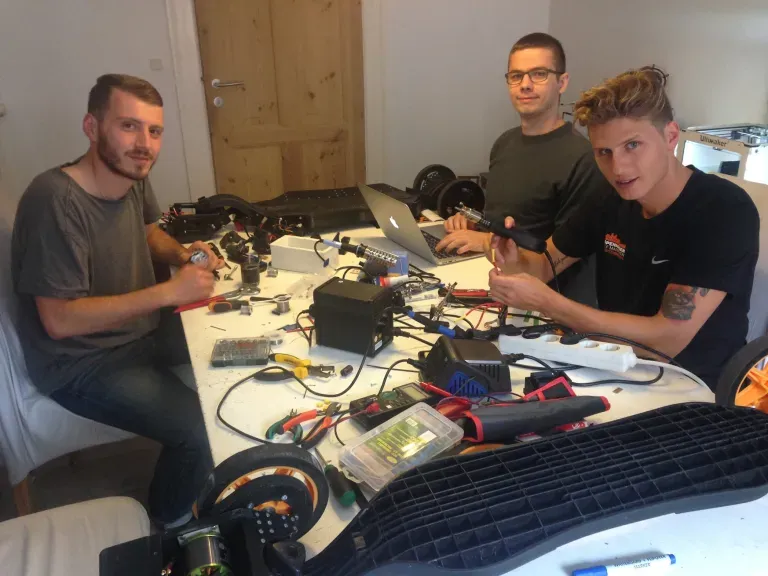
The Faraday Motion team at peak - 7 people passionate about e-mobility across Europe.
The CTO Lesson:
Hardware startups need deep technical expertise more than broad generalists. Better to have:
- 1 exceptional embedded systems engineer
- 1 experienced mechanical designer
- 1 supply chain expert
Than 5 generalist developers.
Modern approach for Dubai startups:
Consider fractional specialists instead of full-time hires:
- Fractional CTO (strategy, architecture): $5,500-11,000/month (AED 20,000-40,000/month)
- Contract embedded engineer: $70-110/hour (AED 250-400/hour)
- Freelance industrial designer: $55-95/hour (AED 200-350/hour)
Cost comparison:
| Approach | Monthly Cost | Flexibility |
|---|---|---|
| Full-time team (5 people) | $41,000+ (AED 150,000+) | Low (committed salaries) |
| Fractional + contractors | $16,000-22,000 (AED 60,000-80,000) | High (scale up/down) |
| Outsourced dev shop | $22,000-33,000 (AED 80,000-120,000) | Medium (contract terms) |
Moving to Berlin: Fundraising and Acceleration
Why Berlin?
2016 - The decision to relocate
Copenhagen was great for prototyping, but Berlin offered:
- Startup ecosystem - Hardware-friendly investors and accelerators
- Talent pool - Experienced startup employees
- Lower costs - 30-40% cheaper than Copenhagen
- Customer access - Automotive industry (Audi, Daimler, Continental)
StartupBootcamp Mobility Program
What we got:
- Funding: $16,500 initial + $66,000 investment (~$82,500 / AED 303,000 total)
- Mentorship: Access to corporate partners
- Network: Introductions to VCs and strategic investors
- Validation: Credibility boost for partnerships
- Office space: Free workspace in Berlin for 6 months
What we gave up:
- 8% equity (standard accelerator terms)
- 3 months full-time commitment
- Focus (accelerator program vs. product development)
Was it worth it?
✅ Yes for:
- Corporate partnerships (Audi, Daimler)
- Investor introductions
- Team hiring
- Brand credibility
❌ No for:
- Follow-on funding (we struggled post-accelerator)
- Product development (lost momentum)
- Customer acquisition (B2B partnerships slow)
The CTO Lesson:
Accelerators are networking investments, not product development time.
If your product isn't ready, delay the accelerator. If you need corporate partnerships, accelerators are gold.
Strategic Partnerships: Working with Automotive Giants
The Opportunity
Between 2016-2018, the automotive industry was obsessed with:
- Electric vehicles (Tesla proving the market)
- Autonomous vehicles (everyone chasing Waymo)
- Micro-mobility ("last mile" solutions)
- Shared mobility (Uber, Lyft disrupting ownership)
We positioned Faraday Motion as micro-mobility experts and landed partnerships with:
Audi MQ! Innovation Summit
- Invited to speak at Audi headquarters in Ingolstadt
- Demonstrated electric skateboard technology
- Discussed future of urban mobility
- Result: Consulting project on micro-mobility concepts
Daimler Vans
- Collaboration on last-mile delivery solutions
- Concept: Electric skateboards for delivery drivers
- Pilot program discussions
- Result: Paid consulting, no production deal
Local Motors (Olli Autonomous Bus)
- Consulted on 3D printing for vehicle manufacturing
- Contributed to online co-creation platform
- Technology exchange partnership
- Result: Great PR, minimal revenue
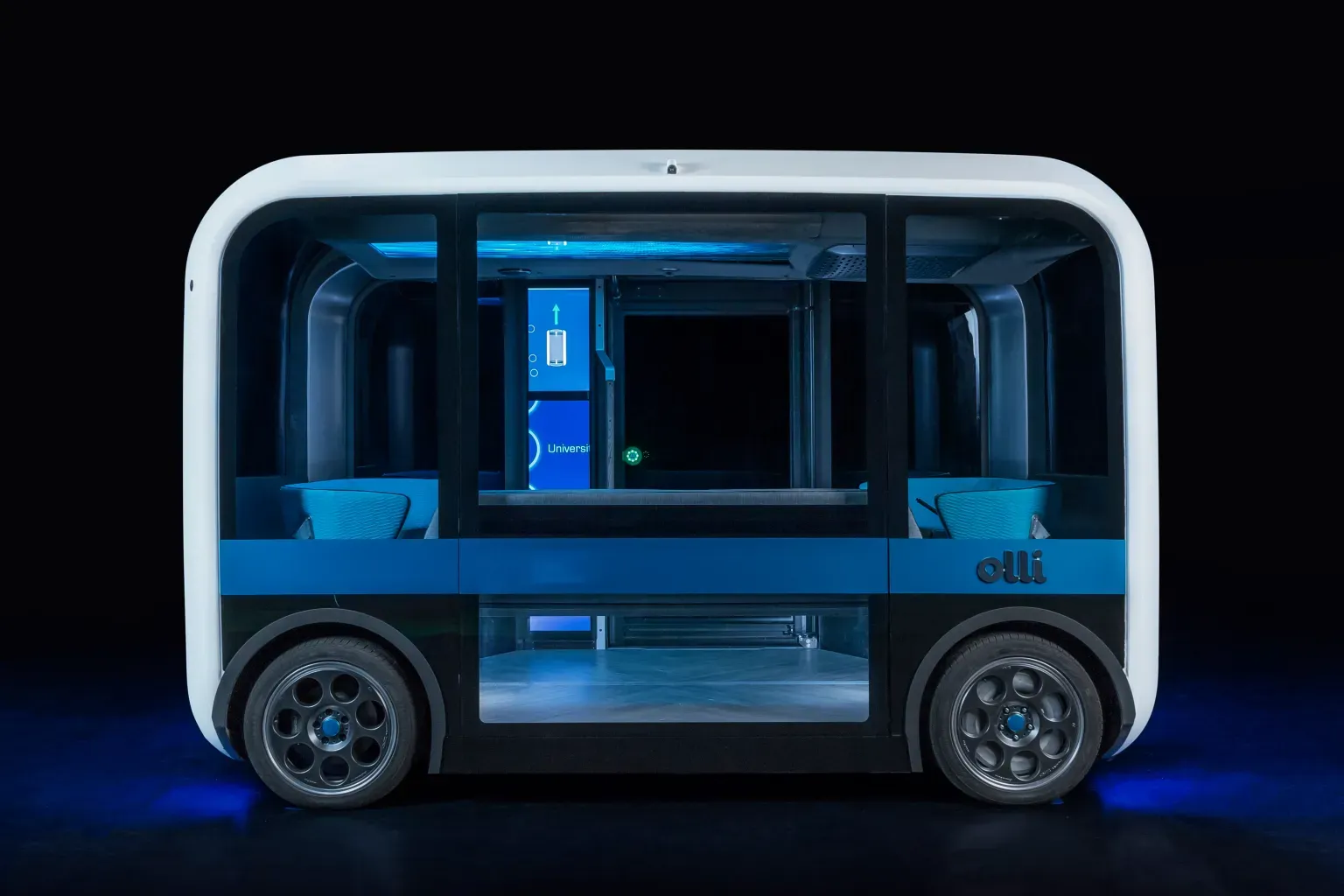
Local Motors Olli - the autonomous bus we consulted on. Co-created online and manufactured using 3D printing.
Continental Automotive
- Explored advanced vehicle control systems
- Discussed sensor integration
- Result: Paid R&D project
The Reality of Corporate Partnerships
What we expected:
- Fast decision-making
- Large purchase orders
- Strategic investment
- Revenue growth
What we got:
- 6-12 month sales cycles
- Pilot programs that never scaled
- Consulting fees (good, not great)
- Innovation theater (big companies experimenting, not committing)
Revenue from corporate partnerships: ~$165,000 (AED 605,000) over 2 years
Time invested: 40% of team capacity
ROI: Marginal (brand value high, revenue low)
The CTO Lesson:
Corporate partnerships are great for credibility, terrible for cash flow.
If you're a startup:
- ✅ Use corporate logos for investor pitches
- ✅ Learn from corporate R&D budgets
- ✅ Build relationships for eventual acquisition
- ❌ Don't depend on corporate revenue
- ❌ Don't let partnerships distract from core product
Open Source Strategy: Building Community and IP
The Faraday Motion Pacer Framework
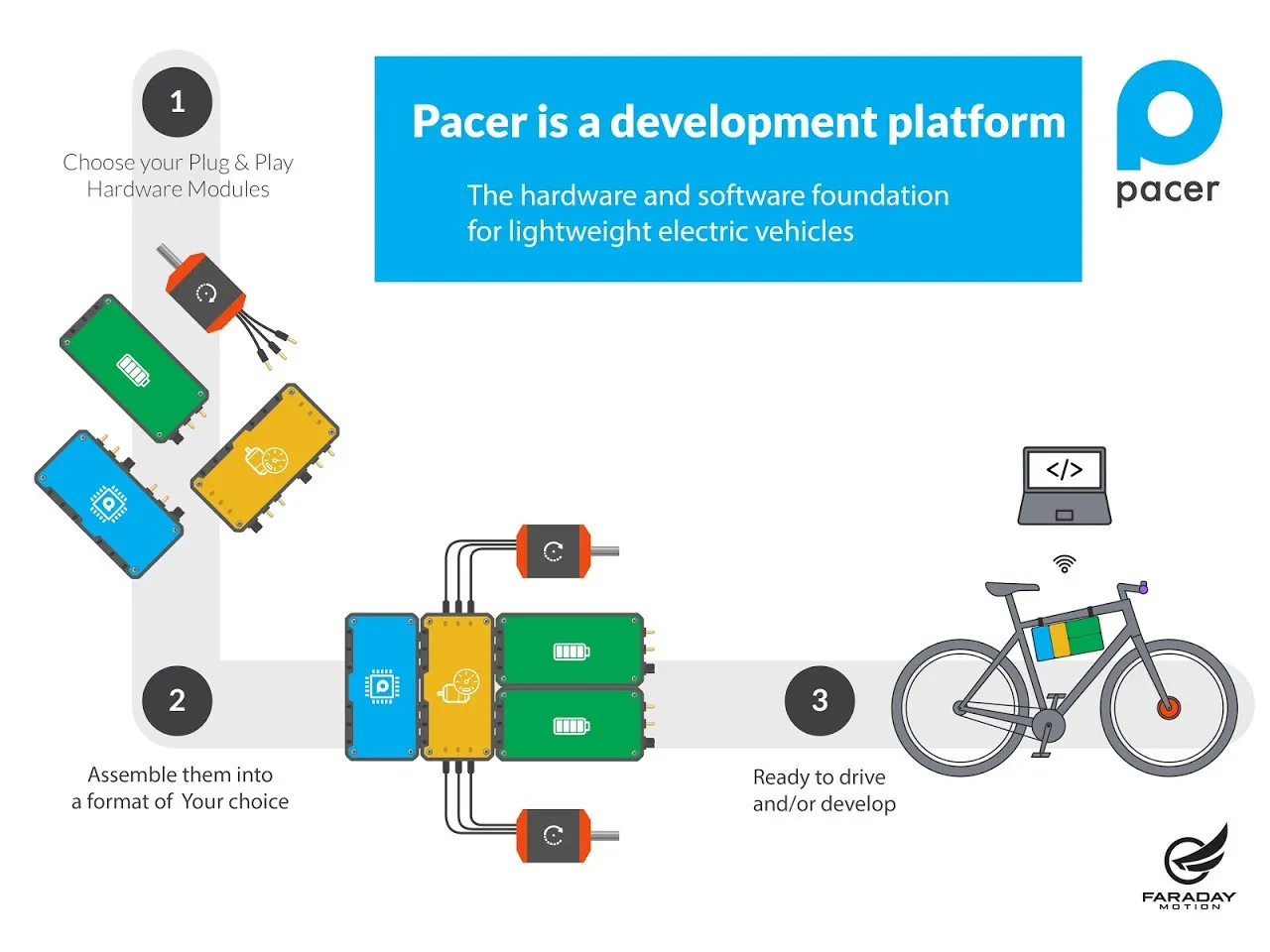
The Faraday Motion Pacer - our open-source firmware framework for light electric vehicles, adopted by 20+ universities worldwide.
What we built:
An open-source firmware framework for electric vehicles:
- Built on FreeRTOS and ESP32
- Controlled motors, batteries, sensors
- Communicated with smartphones and custom controllers
- Enabled rapid prototyping of light electric vehicles
Why open source?
- Community building - Makers and universities adopted it
- Talent acquisition - Contributors became employees/contractors
- Validation - Real-world testing by hundreds of users
- Education market - Universities paid for support/training
- Brand awareness - Positioned us as thought leaders
Results:
- 50+ GitHub stars
- 20+ active contributors
- 20+ universities using it for courses, prototyping and research
- $50,000+ annual revenue (AED 184,000+) from educational licensing and support
The trade-off:
We gave away core IP for community goodwill. Some investors hated this. Others loved it.
The CTO Lesson:
Open source works for:
- ✅ Infrastructure/tools (frameworks, libraries)
- ✅ Educational products
- ✅ Community-driven innovation
Don't open source:
- ❌ Core product differentiation
- ❌ Proprietary algorithms
- ❌ Customer data/insights
Modern approach:
Hybrid model:
- Open-source core (community goodwill)
- Closed-source premium features (revenue)
- Commercial licensing (enterprise customers)
This is how GitLab, MongoDB, and Elastic built billion-dollar companies.
Media, Events, and Thought Leadership
The Highlights
Dragons' Den (National TV)
- Pitched to investors on Denmark's Shark Tank equivalent
- Demonstrated product live
- Result: Great exposure, no investment (wanted too much equity)
SEMA Show (Las Vegas)
- Showcased electric skateboard at world's largest automotive trade show
- Positioned as aftermarket automotive accessory
- Result: US distributor interest, supply chain too complex
Steve Wozniak (Apple Co-founder)
- Built custom electric vehicle for Cube Tech Fair Berlin
- Got it signed by Woz
- Result: Viral social media moment, great PR
Maker Faire (Multiple cities)
- Demonstrated DIY electric vehicle building
- Workshops on 3D printing and embedded systems
- Result: Community growth, educational partnerships
FormNext Purmundus Challenge
- Entered 3D printing design competition
- Showcased advanced 3D-printed vehicle parts
- Result: Industry recognition, materials partnerships
The Value and Cost of PR
Investment in events/PR: ~$88,000 (AED 323,000) over 2 years
Measurable returns:
- 500,000+ Thingiverse downloads
- 100+ press mentions
- 20+ speaking invitations
Actual revenue impact: Hard to measure, likely minimal
The CTO Lesson:
PR and events are expensive vanity metrics unless tied to revenue.
Do this:
- ✅ Target events where customers are
- ✅ Measure ROI (leads generated, deals closed)
- ✅ Prioritize local/regional over international
- ✅ Speak at conferences to build authority
Don't do this:
- ❌ Chase press for ego/validation
- ❌ Attend events "for exposure"
- ❌ Spend >5% of budget on PR
The Technical Infrastructure
Custom Manufacturing Capabilities
What we built in-house:
Large-scale 3D printers:
- Based on MPCNC (open-source CNC framework)
- Custom print heads and extruders
- Build volume: 1m x 1m x 0.5m
- Cost to build: $5,500 per printer (AED 20,000)
- Commercial equivalent: $55,000+ (AED 202,000+)
CNC machines:
- Custom-designed using MPCNC
- Aluminum and wood cutting
- Precision: ±0.1mm
- Cost to build: $3,300 (AED 12,000)
- Commercial equivalent: $22,000+ (AED 81,000+)
Electronics testing:
- Battery testing rigs
- Motor dyno (power measurement)
- Environmental testing (temperature, humidity)
- Safety testing (vibration, impact)
Total investment in manufacturing: ~$44,000 (AED 161,000)
The Software Stack
Firmware:
- Language: C/C++
- RTOS: FreeRTOS
- Hardware: ESP32 (dual-core, WiFi/Bluetooth)
- Tools: PlatformIO, Arduino IDE
Mobile Apps:
- Platform: React Native (iOS + Android)
- Features: Vehicle control, telemetry, settings
- Backend: Node.js + PostgreSQL
Web Platform:
- Framework: Custom PHP + JavaScript
- Features: Community, downloads, documentation
- Hosting: DigitalOcean
E-commerce:
- Platform: WooCommerce (WordPress)
- Payment: Stripe
- Inventory: Custom integration
Development costs: ~$110,000 (AED 404,000) over 2 years
The CTO Lesson:
We over-engineered the software.
What we should have done:
- Used off-the-shelf e-commerce (Shopify)
- Simpler firmware (Arduino libraries)
- No custom web platform (use existing forums/communities)
Savings: ~$55,000 (AED 202,000)
This is the trap of technical founders: building custom solutions when existing tools are good enough.
The Financial Reality: Why We Failed
Total Capital Raised
- Seed round: $220,000 (AED 807,000)
- Grants: $55,000 (AED 202,000)
- Revenue: $330,000 (AED 1,211,000) over 3 years
- Total: $605,000 (AED 2,220,000)
Total Expenses
- Team salaries: $275,000 (AED 1,009,000)
- Manufacturing/inventory: $110,000 (AED 404,000)
- Events/PR: $66,000 (AED 242,000)
- Software development: $77,000 (AED 283,000)
- Office/operations: $66,000 (AED 242,000)
- Total: $594,000 (AED 2,180,000)
The Gap
Cash position: $605,000 - $594,000 = +$11,000
We barely broke even on cash—but the company still failed because we couldn't raise follow-on funding and had no path to profitability with our unit economics.
Why We Couldn't Raise More
Investor feedback:
❌ "Market too niche" (electric skateboards)
❌ "No clear path to profitability" (unit economics unclear)
❌ "Team conflicts" (co-founder tensions visible)
❌ "Regulatory uncertainty" (electric vehicles, battery safety)
❌ "Competition" (Boosted Boards, Evolve raising millions)
What we could have done differently:
- Focus on B2B earlier (educational institutions, corporate)
- Simpler product (faster iteration, lower costs)
- Better unit economics (raise prices or cut costs)
- Single strong CEO (not 3 co-founders)
- Profitability focus (revenue > growth)
The Sale
We sold the company to KickID, a sports technology startup, for:
- $33,000 cash (AED 121,000)
- Debt assumption
- Employment offers for team
Investors lost most of their money. We lost years of our lives.
The Lessons: What Every Hardware Startup CTO Should Know
1. Hardware is 10x Harder Than Software
Why:
- Physical constraints - Laws of physics don't care about your deadline
- Supply chain complexity - 1,000 components from 50 suppliers
- Manufacturing challenges - Quality control, defect rates, scaling
- Inventory costs - Cash tied up in parts and finished goods
- Returns/warranty - Physical products break, software just has bugs
The numbers:
- Software startup to $1M ARR: 12-24 months possible
- Hardware startup to $1M revenue: 36-48 months typical
Advice for Dubai founders:
If you're building hardware, budget 3x time and 2x money vs. software equivalent.
2. Unit Economics Must Work From Day 1
Our mistake:
| Item | Cost |
|---|---|
| Parts/materials | $198 |
| 3D printing | $55 |
| Electronics | $132 |
| Assembly labor | $33 |
| Packaging/shipping | $44 |
| Total COGS | $462 |
| Selling price | $659 |
| Gross margin | 30% |
Seems okay, right? Wrong.
We forgot:
- Returns/warranty: 5-10% of revenue
- Customer support: $22 per unit average
- Payment processing: 3%
- Marketing/acquisition: $55 per customer
Actual margin: 10-15% (not sustainable)
What we needed:
- 50%+ gross margins (industry standard for hardware)
- Selling price: $880-990
- Or cut costs to $220 COGS
The CTO Lesson:
Calculate fully-loaded COGS including:
- ✅ Returns and replacements
- ✅ Customer support
- ✅ Warranty claims
- ✅ Shipping (both ways)
- ✅ Payment processing
- ✅ Customer acquisition
If margins aren't 40%+, rethink the product.
3. Market Size Matters More Than Cool Technology
Our market:
- DIY electric skateboard enthusiasts: ~50,000 globally
- Realistic addressable market: 5,000 people
- At $660 average: $3.3M total market
Investor perspective:
- Venture capital needs $100M+ exit potential
- $3.3M market won't get there
- Not fundable, not scalable
What we should have targeted:
- Electric mobility broadly: $50B+ market
- Educational robotics: $10B+ market
- Corporate innovation consulting: $100M+ serviceable market
The CTO Lesson:
Investors fund big markets, not cool technology.
Before building, answer:
- Total addressable market (TAM): How big?
- Serviceable addressable market (SAM): What can you reach?
- Serviceable obtainable market (SOM): What can you win?
If SOM < $10M, you're building a lifestyle business, not a venture-scale startup.
4. Technical Co-Founders Need Business Co-Founders
Our team:
- 3 technical co-founders (engineering, design, software)
- 0 business co-founders with fundraising/sales experience
Result:
- Great product, poor business development
- Struggled with investor pitches
- No sales process or CRM
- Weak financial planning
What we needed:
- 1 technical co-founder (CTO)
- 1 business co-founder (CEO with sales/fundraising experience)
- Complementary skills, not overlapping
The CTO Lesson:
Engineers love building. Businesses need selling.
If you're a technical founder:
- ✅ Partner with someone who loves sales/fundraising
- ✅ Or hire fractional CFO/COO early
- ✅ Or learn business skills yourself (courses, mentors)
5. Don't Build Everything In-House
What we built custom:
- 3D printers (saved $55K, cost 3 months time)
- CNC machines (saved $22K, cost 2 months time)
- E-commerce platform (saved $5.5K/year, cost $33K to build)
- Community platform (saved $2.2K/year, cost $22K to build)
Time cost: 7 months of development
Opportunity cost: Could have shipped 2 more products
The CTO Lesson:
Buy > Build for anything that's not core differentiation.
In 2025, here's what you should buy:
- E-commerce: Shopify ($27-82/month / AED 100-300/month)
- Community: Discord/Circle ($0-109/month / AED 0-400/month)
- Payments: Stripe (2.9% + $0.30)
- Shipping: ShipStation ($55/month / AED 200/month)
- CRM: HubSpot/Pipedrive ($41-164/month / AED 150-600/month)
- Accounting: Xero/QuickBooks ($41/month / AED 150/month)
Total: $164-490/month (AED 600-1,800/month) vs. $55,000+ (AED 200,000+) to build custom
6. Regulatory Compliance is Not Optional
What we underestimated:
Battery regulations:
- UN38.3 testing for lithium batteries: $11,000 (AED 40,000)
- Shipping restrictions (dangerous goods)
- Import/export documentation
Electrical safety:
- CE marking (Europe): $16,500 (AED 61,000)
- FCC certification (USA): $20,000 (AED 73,000)
- UL certification: $30,000+ (AED 110,000+)
Product liability insurance:
- $55,000/year (AED 202,000/year) for electric vehicles
Total compliance cost: $110,000+ (AED 404,000+)
We spent: $33,000 (AED 121,000) (cut corners, huge risk)
The CTO Lesson:
Budget 15-20% of product development for compliance and certification.
Skipping this risks:
- Product recalls
- Legal liability
- Cannot sell in major markets
- Investor due diligence failure
For Dubai founders:
UAE has specific requirements for:
- Electronics (ESMA certification)
- Batteries (dangerous goods permits)
- Wireless devices (TRA approval)
- Consumer products (Emirates Authority for Standardisation and Metrology)
Budget accordingly.
7. Cash Flow Kills More Startups Than Bad Products
Our cash flow problem:
Manufacturing timeline:
- Order components: Month 1
- Receive components: Month 2
- Assembly and QC: Month 3
- Ship to customer: Month 3
- Payment received: Month 3-4
Cash tied up: 3-4 months
With $110,000 (AED 404,000) inventory, we needed $330,000-440,000 (AED 1.2M-1.6M) working capital.
We had $55,000 (AED 202,000). We constantly ran out of cash.
The CTO Lesson:
Hardware requires 3-6 months working capital per inventory turn.
Formula:
Working capital needed =
  (Monthly burn rate × Lead time in months) +
  (Inventory value × 1.5)
For us:
($22,000 × 4 months) + ($110,000 × 1.5) = $253,000
We needed $253,000 (AED 928,000) minimum. We tried to survive on $55,000 (AED 202,000). Impossible.
What I'd Do Differently Today
If I were starting a hardware startup in Dubai in 2025, here's my playbook:
Phase 1: Validate Fast and Cheap (Months 1-3)
Budget: $5,500-8,200 (AED 20,000-30,000)
✅ 3D print prototypes ($1,360 / AED 5,000)
✅ Electronics breadboarding ($550 / AED 2,000)
✅ Landing page + email list ($820 / AED 3,000)
✅ Pre-orders from early adopters (target: 50 pre-orders at $136 = $6,800 / AED 25,000)
✅ User interviews (20+ potential customers)
Goal: Validate people will pay before manufacturing anything.
Phase 2: Build Minimum Viable Product (Months 3-6)
Budget: $27,000-41,000 (AED 100,000-150,000)
✅ Outsource manufacturing (Chinese factory, small batch)
✅ Buy off-the-shelf components (no custom electronics yet)
✅ Use Shopify for e-commerce ($82/month / AED 300/month)
✅ Hire fractional CTO ($8,200/month × 3 months / AED 30,000/month)
✅ Get regulatory basics (CE marking minimum)
Goal: Ship 100 units, gather feedback, iterate.
Phase 3: Achieve Product-Market Fit (Months 6-12)
Budget: $82,000-136,000 (AED 300,000-500,000)
✅ Iterate based on customer feedback
✅ Optimize unit economics (target 50% gross margins)
✅ Establish supply chain (reliable suppliers, quality control)
✅ Build brand and community (content, social, events)
✅ Explore B2B opportunities (corporate, education)
Goal: $136,000 (AED 500,000) annual revenue, profitable unit economics, repeatable sales process.
Phase 4: Scale (Year 2+)
Budget: $270,000-545,000 (AED 1-2 million) (from revenue + seed funding)
✅ Raise seed round (now with traction)
✅ Expand team (sales, operations, support)
✅ Invest in custom manufacturing (if unit economics support it)
✅ Enter new markets (geographic or product expansion)
Goal: $1.36M (AED 5M) revenue, break-even, path to profitability.
Modern Tools That Change the Game
In 2025, hardware startups have advantages we didn't have in 2014:
AI-Powered Design
Tools:
- Fusion 360 + AI - Generative design (AI suggests optimal structures)
- Midjourney/DALL-E - Rapid concept visualization
- ChatGPT/Claude - Documentation, code generation, problem-solving
Impact: 40-60% faster design iteration
Advanced Manufacturing Access
Services:
- Xometry - Instant quotes for CNC, 3D printing, injection molding
- PCBWay - Circuit boards in 24 hours
- Alibaba - Direct manufacturer access
- Local UAE manufacturers - Growing capabilities in Dubai/Sharjah
Impact: Prototype to production in weeks, not months
Modern Software Stack
Tools:
- Shopify - E-commerce in hours
- Stripe - Payments without custom integration
- Notion - Documentation and knowledge base
- Discord - Community management
- PlatformIO - Professional embedded development
Impact: 80% reduction in custom software development
What This Means for Dubai Founders
You can build what took us 3+ years and ~$660,000 (AED 2.4M) in:
- 12-18 months
- $136,000-218,000 (AED 500,000-800,000)
IF you:
- ✅ Use modern tools (AI-powered design, instant manufacturing quotes)
- ✅ Outsource non-core work (e-commerce, payment processing)
- ✅ Focus on unit economics from day 1 (50%+ margins)
- ✅ Validate before manufacturing (pre-orders, prototypes)
- ✅ Get experienced technical leadership (fractional CTO, advisors)
The Current Opportunity in Dubai/UAE
Why Dubai is Great for Hardware Startups
Advantages:
- Strategic location - 4-hour flight to 2 billion people
- Tax benefits - 0% corporate tax in free zones
- Manufacturing proximity - Close to China, India manufacturing
- Government support - Innovation grants, accelerators
- Wealthy market - High willingness to pay for quality
- Infrastructure - Excellent logistics, shipping
Challenges:
- Small local market - 10M UAE population
- Talent scarcity - Limited hardware engineering talent
- Regulatory complexity - Multiple certification requirements
- Investor landscape - Few hardware-focused VCs
Sectors with Opportunity
🔥 Hot sectors for UAE hardware startups:
- Climate tech - Cooling, water, energy efficiency (critical need)
- AgTech - Indoor farming, automation (food security priority)
- Smart building - IoT, automation (massive construction market)
- Logistics/delivery - Drones, robots (e-commerce growth)
- Healthcare devices - Remote monitoring (aging population)
Market sizes (UAE):
- Smart buildings: $5B+ by 2027
- AgTech: $2B+ by 2026
- Healthcare IoT: $1.5B+ by 2026
How We Can Help Dubai Hardware Startups
Based on my experience building Faraday Motion (and learning expensive lessons), I now help Dubai founders avoid the same mistakes.
Fractional CTO Services for Hardware Startups
What I provide:
✅ Product strategy - What to build, what to buy, what to outsource
✅ Technical architecture - Electronics, firmware, manufacturing
✅ Supplier selection - Vet manufacturers, negotiate terms
✅ Team building - Hire engineers, manage contractors
✅ Regulatory guidance - Navigate certifications, compliance
✅ Fundraising support - Technical due diligence, investor pitches
Engagement models:
- Part-time: 40-80 hours/month ($5,500-9,500/month / AED 20,000-35,000/month)
- Project-based: Fixed scope, fixed price
- Advisory: Monthly retainer for strategic guidance
Ideal for:
- Pre-seed/seed stage hardware startups
- Technical founders who need business guidance
- Business founders who need technical leadership
- Companies pivoting into hardware
Development Services
Beyond strategic guidance, we also build:
✅ Electronics design - Circuit design, PCB layout, prototyping
✅ Firmware development - Embedded systems, IoT, connectivity
✅ Mobile apps - iOS/Android apps for hardware control
✅ Web platforms - E-commerce, dashboards, community
✅ 3D design - CAD modeling, 3D printing, manufacturing files
Using AI-powered development, we deliver 40-60% faster than traditional development.
Example project:
- IoT device (sensors, connectivity, mobile app)
- Traditional timeline: 6-9 months
- Our timeline: 3-4 months
- Traditional cost: $82,000-136,000 (AED 300,000-500,000)
- Our cost: $33,000-55,000 (AED 120,000-200,000)
Conclusion: Hardware is Hard, But Possible
Building Faraday Motion was the hardest thing I've ever done. We:
- Raised funding
- Built amazing technology
- Partnered with global brands
- Built a community of thousands
- Appeared on TV and at international events
And still failed to build a sustainable business.
But I don't regret it.
The lessons I learned are worth millions:
- Unit economics matter more than cool technology
- Market size determines fundability
- Cash flow kills more startups than bad products
- Buy > build for non-core capabilities
- Technical founders need business partners
If you're a founder or CTO in Dubai considering a hardware startup:
✅ Do it - UAE has real advantages for hardware
✅ Validate first - Don't manufacture until you have pre-orders
✅ Focus on margins - 50%+ gross margins or rethink the product
✅ Use modern tools - AI, outsourcing, off-the-shelf components
✅ Get experienced help - Fractional CTO, advisors, mentors
The hardware revolution is happening. With the right approach, Dubai founders can win.
Ready to discuss your hardware product idea?
Contact us for a free consultation on product strategy, technical feasibility, and realistic timelines/budgets.
- 📧 Email: info@pedersendev.com
- 📞 Phone: +971 55 546 7613
- 🌐 Website: www.pedersendev.com
- 📍 Location: Media One Tower, Dubai
Sune Pedersen is the founder of Pedersen Development and former CTO of Faraday Motion. With 25+ years of experience in hardware and software development, he helps Dubai startups build better products faster and avoid expensive mistakes.